XII The Echo
On memory, recognition, and return
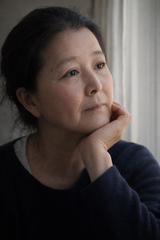
I was still a teenager
when La Grande Vadrouille entered my life.
It was the 1980s.
I had never heard of France.
“Burgundy” meant nothing to me.
From that film, a world appeared.
Not only danger,
but laughter within it.
Meals shared quietly.
A hidden room above a farm.
Strangers sheltered without declaration.
There was absurdity.
But also something else:
lightness in the presence of fear.
People helped one another without speech.
A glance.
A gesture.
A bowl of soup.
It stayed with me.
Because what I knew was different.
Kindness existed,
but it was cautious.
Joy was measured.
Connection carried weight.
In the film, it did not.
Care appeared without ideology.
Without fear.
I did not know if it was real.
But I remember thinking, clearly:
One day,
I want to live in a world like that.
I did not believe it was possible.
Life felt too heavy.
Too closed.
Still, something remained.
For years, I moved—
across places, languages, and forms of life.
I never aimed for France.
Certainly not Burgundy.
And yet, I arrived.
One evening, in Bouhy,
I stepped into a room filled with light.
A former butcher’s space, transformed.
Part kitchen.
Part stage.
Part gathering.
People sat close together.
Voices overlapped.
Laughter carried without apology.
A pianist played.
Singers moved between humor and precision.
The kitchen worked in rhythm behind them.
Plates passed.
Wine moved.
The room answered.
At the center stood the owner.
A butcher by trade.
But also an artisan.
A performer.
A figure who gathered people.
And in that moment,
something returned.
Not a place.
A feeling I had known before.
The same one I had seen, long ago, in the film.
Not identical.
But continuous.
The same insistence on living
within uncertainty.
I had spent years avoiding crowds.
Yet here,
I was at ease.
Not because I had changed completely.
But because something had aligned.
More than forty years later,
I recognized it.
It had never been just a comedy.
It had been a possibility.
And without knowing it,
I had been moving toward it.
I have never believed in fate.
But that evening,
it felt less like arrival
than recognition—
of something not finished.
—